Pill Identifier & Drug Search
- 3.7
- Rating
- 100.00K
- Installs
- Free
- Price

 Analysis by App-foxy
I approached Pill Identifier & Drug Search as a practical reference tool rather than something to browse casually. Its purpose is straightforward: help me identify a pill, look up a drug, and read basic medicine information when I need a quick starting point. That focus makes it useful in moments when packaging is missing, a name is unfamiliar, or I want to check a medicine before speaking with a pharmacist or doctor.
The app is free, aimed at Everyone, and sits in the Medical category. It comes from FriendsApp Listing and has built a sizeable audience, with more than one hundred thousand installs, a 3.7 average rating, and roughly thirteen hundred ratings overall. Those figures suggest a tool people find helpful but not flawless, which matches my impression: it can shorten the path to useful information, but it should not be treated as a replacement for professional medical advice.
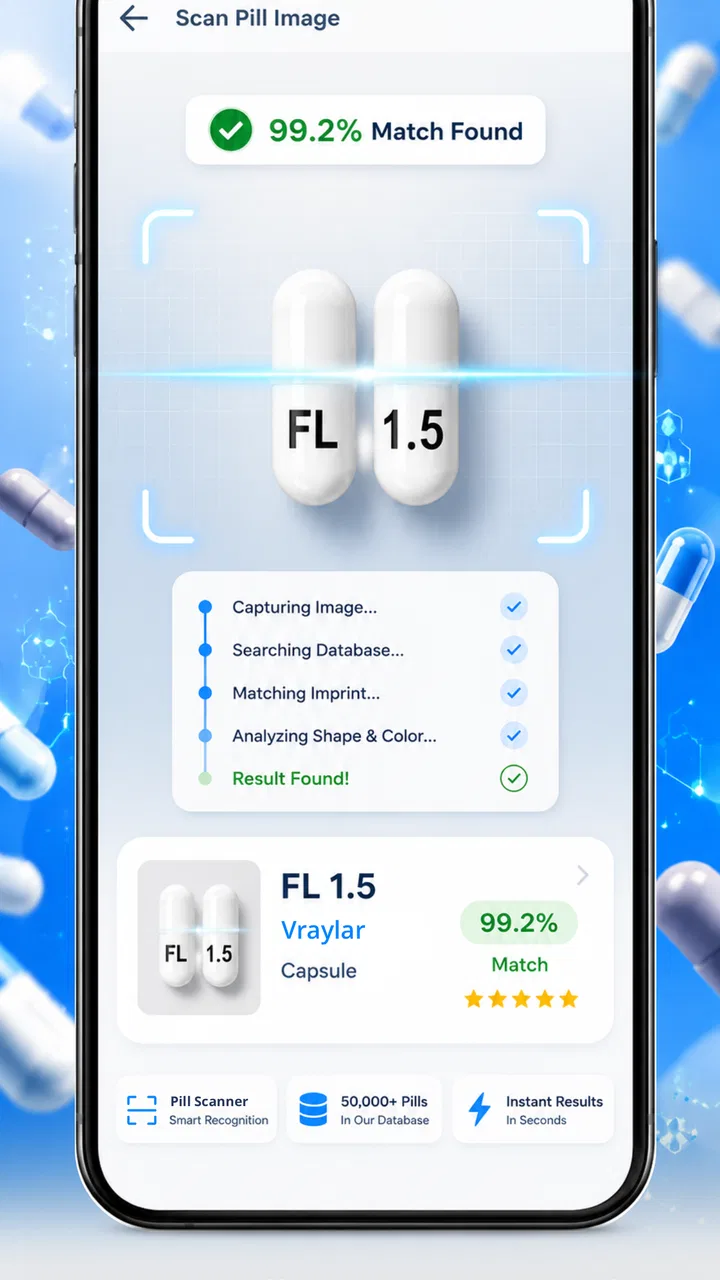
What I like most is the clear starting point. I do not have to understand a complicated medical database before using it. I can begin with the pill identifier, search for a medicine by name, or move through the available drug information until I find the relevant entry. The experience is best when I use it to organize questions and verify what I already suspect, rather than asking it to make a diagnosis.
You May Also Like

 Blood Strike: 2.5 Anniversary
Blood Strike’s Loadouts Turn Every Drop Into a Tactical Gamble
A close look at Blood Strike’s custom loadouts: how fast access to signature weapons reshapes its battle royale rhythm, rewards preparation, and narrows the gap between fights.

 Pandora - Music & Podcasts
Pandora’s Music Is Easy to Start, but Harder to Recover
Pandora’s strength is its low-effort path from a seed to a station. Its weak spot is how much confidence it asks you to place in connection, setup, and quiet recovery.

 8 Ball Pool
 Is Built on Rivalries, Rematches, and Routine
A close look at the rivalries, rematches, shared routines, and unanswered safety questions that turn a quick pool match into a persistent mobile community.

 Samsung Music
’s Quiet Strength Is Playing What You Already Own
Its reach comes less from spectacle than from dependable access to a personal library. That simplicity is both the app’s strongest retention engine and its ceiling.

 AccuWeather: Weather Radar
AccuWeather Review: A Quick, Clear Forecast for Everyday Decisions
For everyday plans, the best forecast is the one you can understand quickly. AccuWeather makes rain timing, radar, and local conditions easy to act on, with a few trade-offs.

 Hill Climb Racing
Why Hill Climb Racing Still Turns Crashes Into One More Run
A tiny car, a bumpy hill and one more upgrade: Hill Climb Racing keeps resurfacing because its simple chaos makes every near-miss feel personal.
More From Our News Desk



How I use the app from the first search to a useful answer
I use the app as a sequence of checks rather than a shortcut to a conclusion: first I gather the pill’s visible clues or copy the medicine name carefully, then compare the result with the item in front of me. That approach helps me notice when a search is uncertain instead of forcing a match. Next, I look at a few simple checks that can prevent avoidable search friction.
A simple workflow works better than guessing
My usual first step is to collect every visible clue before opening a result. I look at the tablet or capsule’s color, shape, markings, and whether it has a line or other visible detail. If I am searching by name, I try the spelling printed on the package instead of relying on memory. This small habit matters because a partial or misspelled query can lead to several similar-looking medicines.
When the pill is unidentified, I treat the result as a shortlist, not a final answer. A visual match alone is not enough. I compare the imprint and appearance with the physical pill, then check the medicine name and information shown in the result. If anything conflicts, I stop and ask a pharmacist. The safest use of this app is confirmation support, not self-prescribing.
A realistic example is finding a loose tablet in a travel bag after the original blister pack has been thrown away. I can use the visible imprint and appearance to investigate it, but I would not take it simply because the screen displays a likely match. I would also consider who the medicine belongs to, whether it is expired, whether the packaging might have been mixed up, and whether the person who needs it has allergies or other health conditions.
For a medicine I already know, the search function is more convenient. I can use it to refresh my memory about a drug’s purpose or to prepare a focused question for a healthcare professional. That is particularly helpful when several medicines have similar names. Searching the full name rather than only the first few letters reduces the chance of selecting the wrong entry.
Reading the result without overinterpreting it
I found it useful to separate three questions that are easy to blur together. First, “What medicine might this be?” Second, “What is this medicine generally used for?” Third, “Is it suitable for me right now?” The app can help with the first two, but the third depends on personal medical history, dosage instructions, interactions, pregnancy status, allergies, and the reason the medicine was prescribed.
That distinction also changes how I read drug information. I look for the medicine’s general role and use the entry to identify topics worth discussing with a professional. I do not change a dose, stop a prescribed treatment, or combine medicines based only on a search result. If a result raises concern about a side effect or interaction, I use that concern as a prompt to contact a pharmacist rather than trying to solve it alone.
Another practical habit is checking the exact product name before sharing information with someone else. A brand name, generic name, extended-release version, and combination product may not be interchangeable. If the app returns a close match, I keep searching until the imprint, form, and name make sense together. This takes longer than accepting the first result, but it is far safer.
What the app is good for in everyday life
This is most useful for people who regularly encounter unfamiliar medicines: caregivers sorting a household medicine cabinet, travelers checking a product away from home, students learning common drug names, or patients preparing for a consultation. It can also help someone create a clearer list of medicines before an appointment, provided the list is checked against the original packaging or a pharmacist’s records.
I would be especially comfortable recommending it as a first-pass reference for non-urgent questions. For example, if I notice that two packages have nearly identical names, I can search both and write down the differences to discuss with a professional. That is more productive than relying on a vague memory of what each medicine does.
It is less suitable when a person needs immediate emergency guidance, a precise dosing decision, or a diagnosis. Someone who has taken an unknown pill and is feeling unwell should contact emergency services or poison-control resources appropriate to their location, not spend time trying to resolve the situation through an app. Likewise, a person managing a complex treatment plan will usually get better answers from a pharmacist with access to the complete medication history.
Settings and habits worth checking
There is no advantage in treating every available option as something that must be changed. I prefer to begin with the default search behavior, then check whether the app presents any display or search preferences that make repeated use easier for me. The useful principle is simple: adjust only what improves readability or reduces mistakes, and leave anything unfamiliar alone until I understand its effect.
On a phone with a small screen, readable text matters more than decorative presentation. I take a moment to make sure medicine names and explanatory text are comfortable to scan. When I am tired or checking a medicine in poor lighting, a crowded result is easier to misread. I also keep my device’s system language and keyboard behavior in mind, since inconsistent spelling can make name searches less reliable.
Before relying on the app during travel, I open it and perform a normal search while I still have time to verify the result. This is a better test than assuming every medical reference will behave identically in every situation. I also keep the original labels, prescriptions, and pharmacy information available. The app is a supplement to those sources, not a reason to discard them.
The current version is 5.2.4, and it runs on Android 7.0 or later. That makes it accessible on many older Android devices, which is useful if a family member keeps an older phone for medical organization. I would still install it before an urgent situation, check that it opens properly, and become familiar with its search flow. Last-minute learning creates avoidable pressure.
Faster patterns for repeat users
Experienced use is less about tapping quickly and more about following the same order every time. I start with the strongest identifier available, search precisely, compare the result with the physical medicine, and only then read the general information. Repeating that sequence prevents me from jumping straight from a vague visual impression to a confident conclusion.
For medicines in my own cabinet, I find it helpful to search one item at a time and record the exact name from the package. I do not rely on a remembered nickname or a cropped photo. If I am preparing for a medical visit, I use the app to understand terminology, then bring the actual containers or a verified list to the appointment. This turns the app into a preparation aid rather than an unofficial medical record.
A second efficient pattern is using the search tool to compare names before discussing a medicine. Suppose a doctor mentions a generic drug and I recognize only a brand name at home. I can search both terms, check whether they refer to the same medicine, and write down the question I still need answered. That saves consultation time without pretending the app knows whether the substitution is appropriate for me.
A third habit is treating uncertainty as information. If two results appear plausible, that is not a reason to choose the more familiar one. It tells me that the available clues are insufficient. I then look for the original package, ask the person who received the medicine, or contact a pharmacist. In my view, the app is most valuable when it helps me recognize the boundary between a useful answer and an unsafe guess.
I also avoid searching while distracted. Pill identification is not a good task to perform while walking, driving, or caring for someone in distress. I place the medicine on a clean surface, use good lighting, and inspect both sides if possible. These are ordinary precautions, but they improve the quality of the information I enter and reduce the chance of confusing two tablets.
Where the app’s limits become important
The 3.7 average reflects a mixed experience, and the limitations are understandable for this kind of tool. A pill can be damaged, counterfeit, altered, or supplied in a form that looks different from the common description. Lighting can change color, imprinting can be faint, and several products can share similar shapes. No search interface can remove those real-world problems.
Search results also depend on how accurately I describe or name the medicine. A typo, missing letter, or confusion between a brand and generic name can send the search in the wrong direction. I therefore avoid treating a result as reliable simply because it appears quickly. The app can make research faster, but speed is not the same as certainty.
Another limitation is context. General drug information cannot know my complete medical history, other medicines, kidney or liver function, allergies, or the instructions given by my prescriber. Even a correct medicine entry may be irrelevant to the decision I am about to make. This is why I would choose a pharmacist, doctor, or official emergency resource whenever the question involves an immediate risk or a personal treatment decision.
Compared with a printed leaflet, the app is more convenient for searching unfamiliar names and investigating a pill when the packaging is not immediately beside me. Compared with a pharmacy consultation, it is less personal and cannot ask follow-up questions about my situation. Compared with a general web search, a dedicated drug reference feels more focused, but I still need to judge the quality and relevance of what I read.
That comparison makes the best role for this app clear. It occupies the space between “I have no idea what this medicine is” and “I am ready to ask a precise professional question.” It is not the right replacement for a prescription label, a pharmacist’s advice, or emergency care. People who want a comprehensive personal medication-management system may prefer a different category of app, especially if they need reminders, refill tracking, or shared treatment records rather than identification and reference.
Who should install it and who should skip it
I think it is a sensible free download for Android users who occasionally need a quick pill lookup and understand the difference between information and medical advice. The Everyone age rating also makes it approachable for households, although younger users should still involve an adult when a medicine is unknown or someone has taken it accidentally.
It is a weaker fit for someone expecting a diagnosis, automatic treatment recommendations, or a complete medication-management workflow. It may also frustrate users who want every answer to be definitive from a blurry image or incomplete description. The app cannot compensate for missing identifying details, and a cautious user may end up needing a professional confirmation anyway.
My recommendation is strongest for preparation and verification: identify the medicine you are discussing, learn the basic terminology, note questions, and take the result to a qualified professional when the decision affects treatment. That workflow gives the app a useful job without asking it to perform a job it was never designed to do.
My verdict after making it part of a repeatable routine
Pill Identifier & Drug Search earns its place as a focused medical reference because it makes the first step less intimidating. I like that I can approach an unfamiliar pill or drug name without navigating a broad health portal. Its free availability, broad device support, and straightforward purpose make it easy to keep available for occasional use.
My final view is positive but careful. The app is at its best when I use it methodically: gather accurate clues, search precisely, compare the result with the actual medicine, and escalate uncertainty to a pharmacist or doctor. It is not a substitute for professional judgment, and I would never use it to make an urgent or high-risk decision alone.
If you want a quick way to investigate medicine names and prepare better questions, I would recommend trying it. If you need reminders, prescription management, emergency guidance, or personalized treatment decisions, I would choose a more specialized service instead. Used within those boundaries, this app is a practical starting point rather than an overconfident answer machine.
FAQs for Pill Identifier & Drug Search
01What is Pill Identifier & Drug Search used for?
Pill Identifier & Drug Search is designed to help users look up medicines by entering details such as the pill’s imprint, color, shape, or name. It can provide general information about possible medications, including uses, active ingredients, warnings, and common side effects. The results are intended for reference and should not replace advice from a doctor or pharmacist.
02Can Pill Identifier & Drug Search identify any unknown pill accurately?
The app may help narrow down the identity of a tablet or capsule, but identification is not guaranteed. Several medicines can look similar, and pills may vary by country, manufacturer, dosage, or packaging. Always compare the result with the original prescription or packaging and confirm the information with a qualified pharmacist before taking an unidentified medication.
03Does the app provide information about dosage, side effects, and interactions?
Depending on the available database and the selected medicine, Pill Identifier & Drug Search may display dosage guidance, active ingredients, common side effects, precautions, and possible interactions. This information is general and may not reflect your medical history, allergies, age, pregnancy status, or other medicines. Consult a healthcare professional before changing or starting any treatment.
04Is Pill Identifier & Drug Search a substitute for a doctor or pharmacist?
No. The app is a convenient reference tool, not a diagnostic service or a replacement for professional medical advice. It cannot determine whether a medicine is appropriate for your condition or confirm that a treatment plan is safe for you. Contact a doctor or pharmacist for personalized guidance, especially if you experience unusual symptoms or have concerns about a medication.
05What should I do if I suspect I took the wrong medicine or an unsafe amount?
Do not rely only on the app in an emergency. If you may have taken the wrong medication, an excessive dose, or a pill with an uncertain identity, contact local emergency services or a poison control center immediately. Keep the container or packaging available, avoid taking additional doses unless instructed, and seek urgent medical help if symptoms such as breathing difficulty, confusion, seizures, or severe drowsiness occur.
Pros
- Identifies many medicines by name
- shape
- color
- and imprint.
- Useful for checking unfamiliar pills before taking them.
- Drug search includes common uses and basic medication details.
- Can help prepare questions for a doctor or pharmacist.
- Convenient reference tool for home
- travel
- or organizing medicines.
Cons
- Results may be incomplete for regional or newly approved medications.
- Image and imprint matching can be inaccurate in poor lighting.
- Information should not replace advice from a healthcare professional.
- Some features or drug details may require an internet connection.
- Ads or premium options may interrupt quick medication searches.

Pill Identifier & Drug Search
Gallery